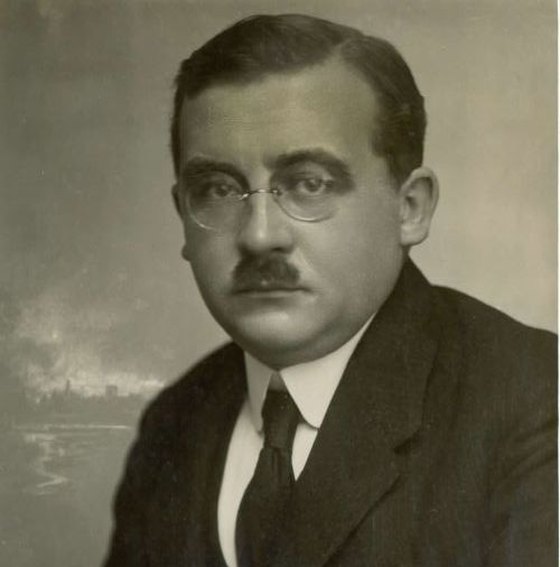
foto · Veličan Bešter · Public domain · Wikimedia Commons
Portrait · GM
Milan
Vidmar
An electrical engineering professor and grandmaster who combined an academic career with games against the best of his era.
Years
1885-1962
Title
GM
City
Ljubljana
Games in the archive
1
Milan Vidmar (1885–1962), born in Ljubljana, was an engineer, professor and one of the leading chess players of the first half of the twentieth century. Alongside his academic career, he competed against Capablanca, Alekhine and Rubinstein. In 1950, he was among the first recipients of FIDE's official Grandmaster title.
At the strong San Sebastián tournament in 1911, he shared second place with Akiba Rubinstein behind José Raúl Capablanca. His win against Ossip Bernstein comes from that event. The key manoeuvre is easy to follow: White's rook travels through d3 to h3, joining the queen in the attack.
Milan Vidmar - Ossip Bernstein · San Sebastian, 1911
8
7
6
5
4
3
2
a1
b
c
d
e
f
g
h
Move · · starting position
0/83 · ← →
0/83 · ← →
?! inaccuracy? mistake?? blunder
Move listSAN
1.
2.
3.
4.
5.
6.
7.
8.
9.
10.
11.
12.
13.
14.
15.
16.
17.
18.
19.
20.
21.
22.
23.
24.
25.
26.
27.
28.
29.
30.
31.
32.
33.
34.
35.
36.
37.
38.
39.
40.
41.
42.
Vidmar–Bernstein, San Sebastián 1911: a rook swings along the third rank to join the attack, sending Black's king on a long journey.
Vidmar continued to win and place highly at international events while working at the university. Against future world champion Max Euwe at Carlsbad in 1929, he builds pressure along open files. The closing moves bring a short, precise tactical finish.
Milan Vidmar - Max Euwe · Karlovy Vary, 1929
8
7
6
5
4
3
2
a1
b
c
d
e
f
g
h
Move · · starting position
0/71 · ← →
0/71 · ← →
?! inaccuracy? mistake?? blunder
Move listSAN
1.
2.
3.
4.
5.
6.
7.
8.
9.
10.
11.
12.
13.
14.
15.
16.
17.
18.
19.
20.
21.
22.
23.
24.
25.
26.
27.
28.
29.
30.
31.
32.
33.
34.
35.
36.
Vidmar–Euwe, Carlsbad 1929: 34.Re8+ and a rook sacrifice on f8 prepare 36.Nf5+, uncovering the queen's attack from a3 to f8.
At Nottingham in 1936, the fifty-one-year-old Vidmar was still competing alongside world champions. Against Efim Bogoljubow, a sharp opening leads to a long endgame. Black's passed f-pawn demands attention, so White must combine defence with active rook play.
Milan Vidmar - Efim Bogoljubow · Nottingham, 1936
8
7
6
5
4
3
2
a1
b
c
d
e
f
g
h
Move · · starting position
0/109 · ← →
0/109 · ← →
?! inaccuracy? mistake?? blunder
Move listSAN
1.
2.
3.
4.
5.
6.
7.
8.
9.
10.
11.
12.
13.
14.
15.
16.
17.
18.
19.
20.
21.
22.
23.
24.
25.
26.
27.
28.
29.
30.
31.
32.
33.
34.
35.
36.
37.
38.
39.
40.
41.
42.
43.
44.
45.
46.
47.
48.
49.
50.
51.
52.
53.
54.
55.
Vidmar–Bogoljubow, Nottingham 1936: White's rook contains the opposing threats and gradually collects pawns.
Vidmar was chief arbiter of the 1948 World Championship tournament and recorded his chess memories in Goldene Schachzeiten. His games offer an equally rewarding encounter with that era: a rook lift, a discovered attack and a patient endgame remain clear, useful ideas at today's board.